As the 61st International Art Exhibition of La Biennale di Venezia approaches its Nov. 22 conclusion, an ambitious collaborative installation by Lawrence Chua, associate professor in the School of Architecture, and his colleagues is drawing international attention.
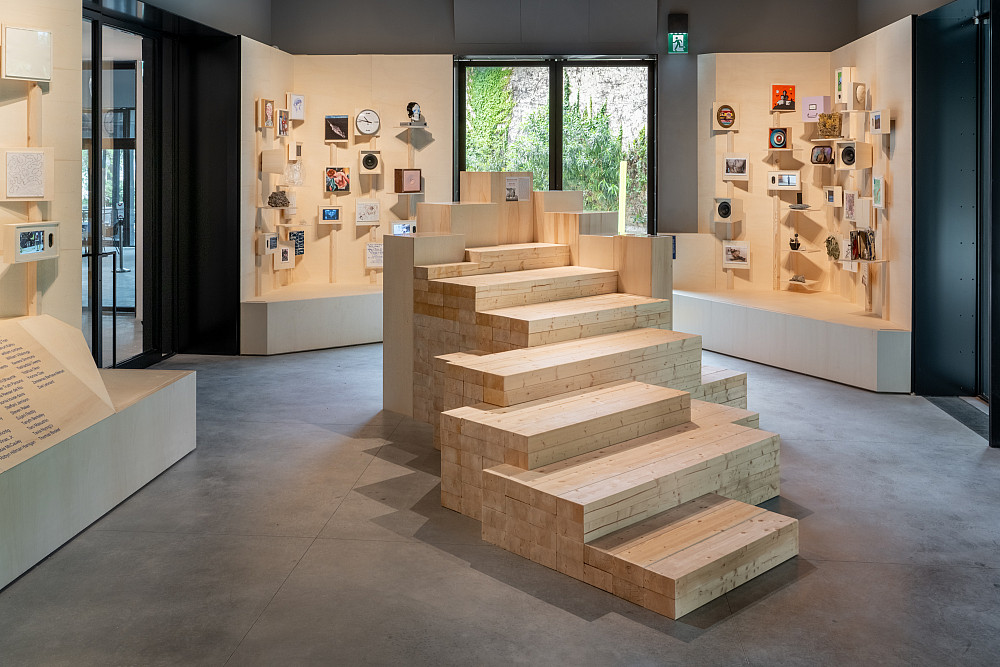
Titled Chimera, the installation brings together contributions from approximately 150 artists associated with Denniston Hill, the artist-founded cultural laboratory Chua co-founded in 2004 with artists Julie Mehretu and Paul Pfeiffer. Presented as part of this year’s exhibition, In Minor Keys, the project draws on more than two decades of work at Denniston Hill to create an immersive experience in Venice’s historic Giardini.
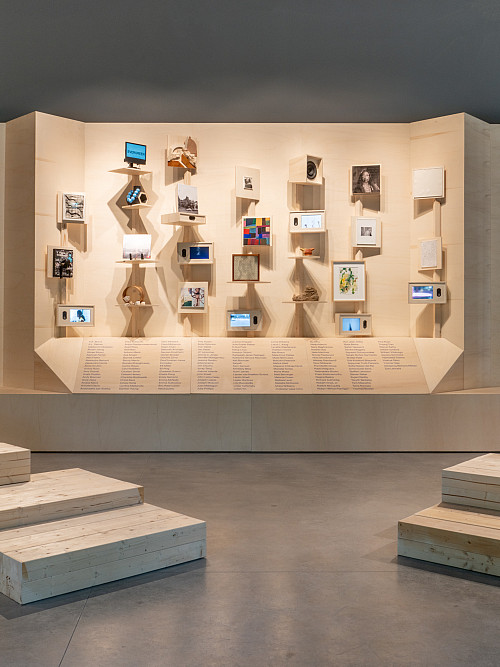
Credit: Photos by Gaia Cambiaggi/Studio Campo. Courtesy of Denniston Hill.The installation is inspired by the Surrealist parlor game known as the Exquisite Corpse, in which participants contribute fragments to a collective composition without seeing the whole. For Chimera, alumni artists were invited to create works corresponding to different parts of a collective body. The head represents dreams and invention, the torso voice and transformation, and the legs movement, migration and journeys into the future.
Together, these contributions bring together hybrid forms and totemic figures assembled from contributions spanning continents, disciplines and generations.
“Chimera presents worldmaking as a collective act,” says Mehretu. “New forms emerge from chance encounters, collisions and the alignment of disparate parts.”
Architecture for Encounter
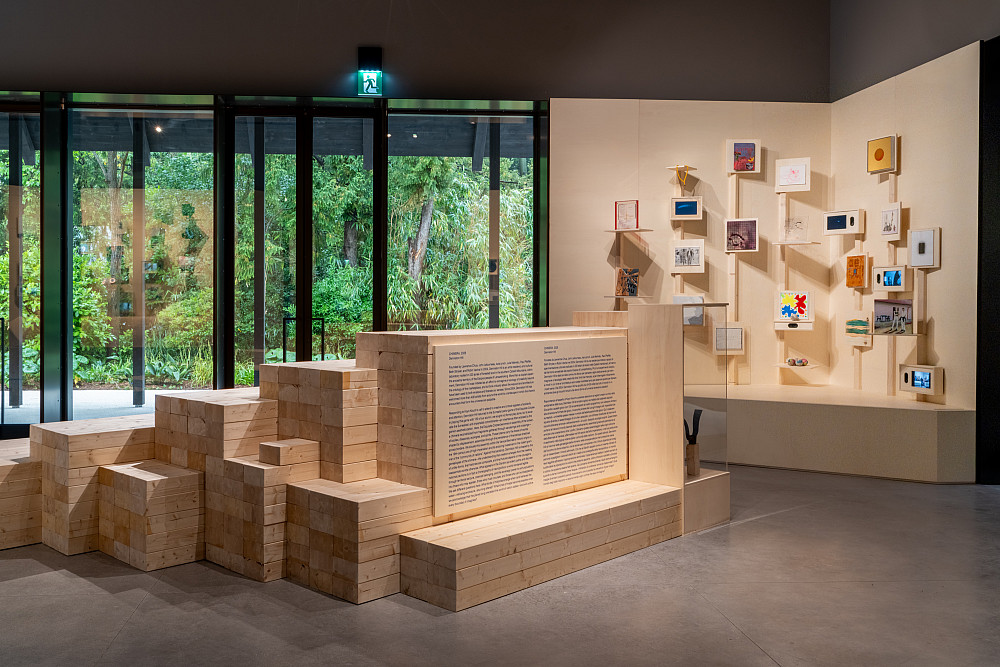
The installation’s physical setting is central to the experience. Designed by architect Koray Duman, founder of B-KD, the environment translates Denniston Hill’s collaborative ethos into architectural form. Duman’s design process included interviews with alumni, mapping of Denniston Hill’s 220-acre Catskills property, studies of vernacular front porches and research into the organization’s history.
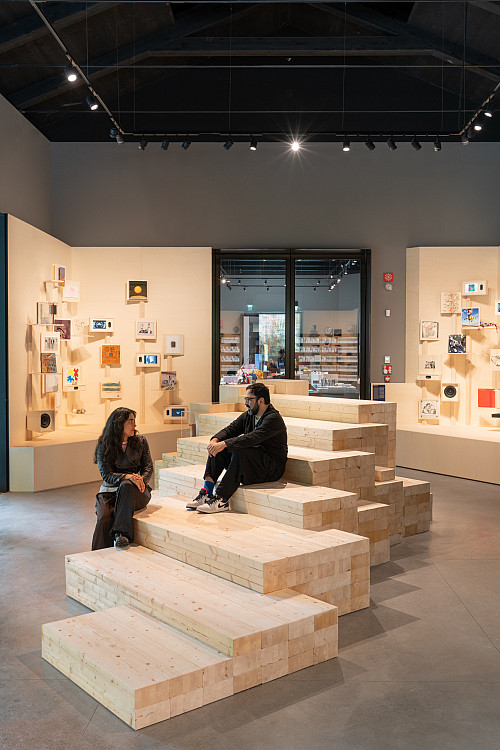
At the center is an arena-like gathering space designed to bring visitors together. Individual artworks are displayed on totem-like armatures, bringing art and architecture into a shared environment for collective engagement.
“The arena opens opportunities for conversation and reflection,” says Denniston Hill Executive Director Megan Steinman, who oversaw coordination of the project’s network of artists and collaborators. “In that sense, it becomes a microcosm of Denniston Hill itself.”
The Biennale assigned Denniston Hill an interstitial space between the bookstore and restrooms, in the Giardini pavilion, along the passage connecting the national pavilions and café. Rather than viewing the location as a limitation, Chua and his collaborators saw an opportunity.
“We began to think of it as a social condenser—a space structured not around representation but around the possibility of relationship,” says Chua.
That idea took shape even before the exhibition opened. During previews in late April, a rainstorm swept across the Biennale grounds, sending visitors into the installation for shelter. They settled onto the benches, turning an unexpected pause into an opportunity for connection.
The team also organized an indigo-dye workshop with artists Philip Huang and Chomwan Weeraworawit, who work with local dyers in rural northeast Thailand. Bringing fermented indigo dye from Thailand, they invited visitors to dye T-shirts, bags and other clothing. Participants rinsed their creations in nearby restrooms and hung them in the courtyard between the installation and café.
For Chua, these moments reflected the kind of creative exchange Denniston Hill has fostered in the Catskills for more than two decades, where relationships and chance encounters can lead to new ideas.
A Different Kind of Presence in Venice
Within the Giardini, where national pavilions traditionally organize much of the Biennale experience, Chimera offered an alternative to the national-pavilion model, emphasizing shared authorship and artistic exchange.
The installation also received critical attention. Art magazine frieze, in its review of In Minor Keys, highlighted Denniston Hill’s contribution as one of the exhibition’s most compelling realizations of the vision of late artistic director Koyo Kouoh, recognizing its role as a place for gathering, study and reflection.
For Chua, the international recognition honors the collective work behind the project.
“It is very meaningful for the work that we’ve done at Denniston Hill to be recognized at an international level,” he says. “Most importantly, it honors the more than two-decade collaboration between myself and my study partners, Julie Mehretu and Paul Pfeiffer.”


